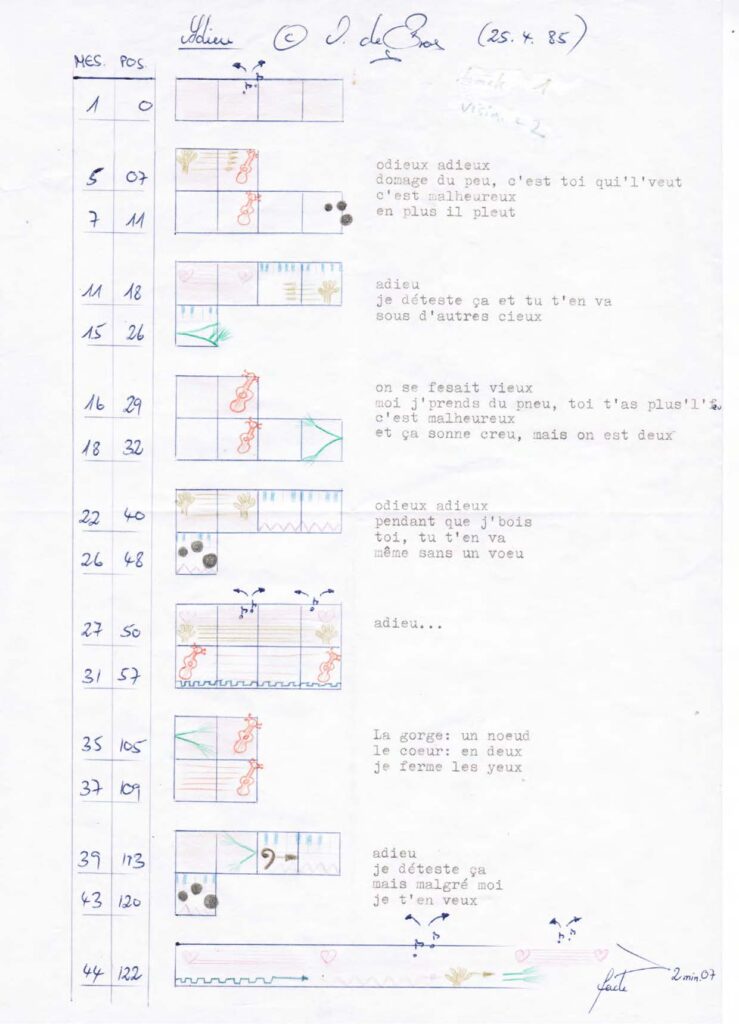
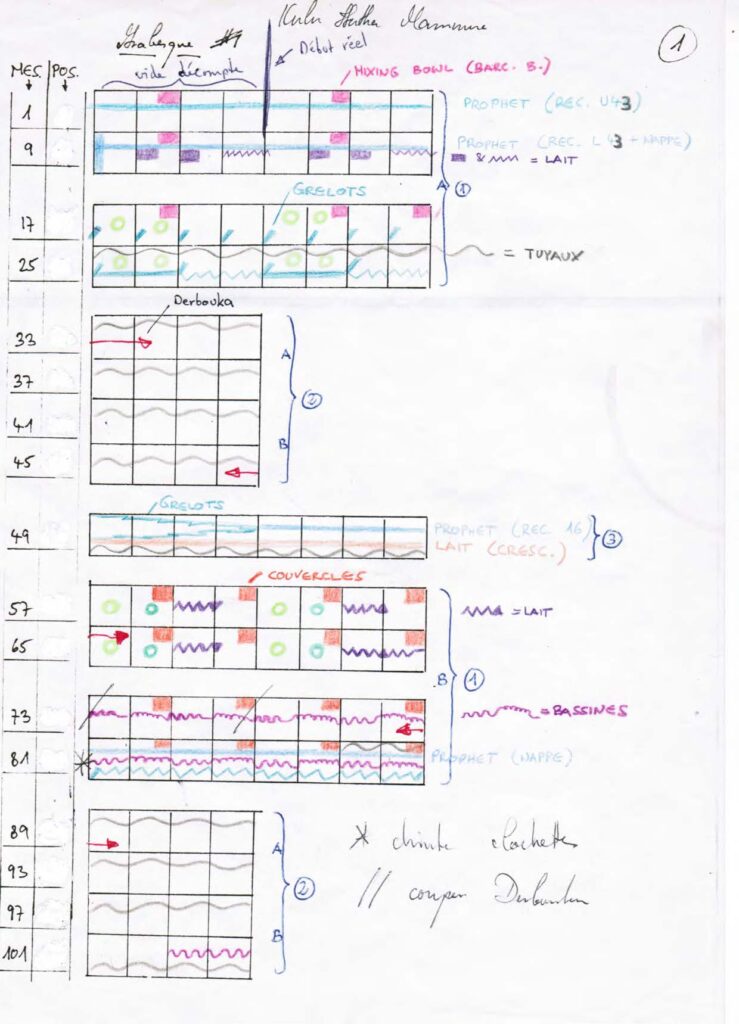
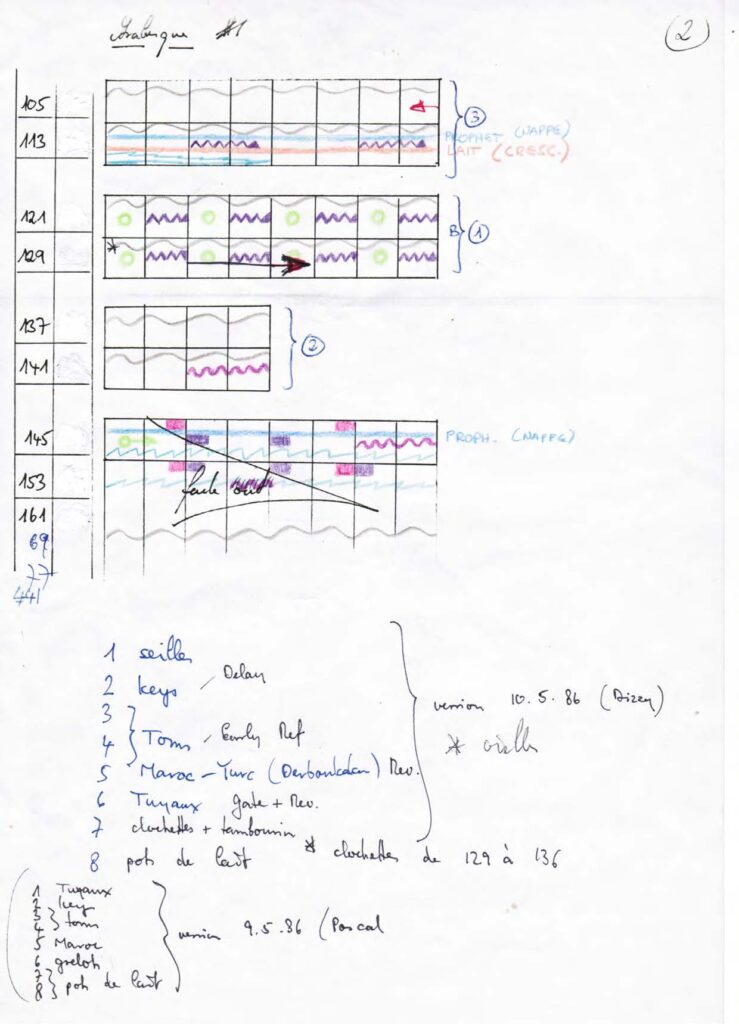
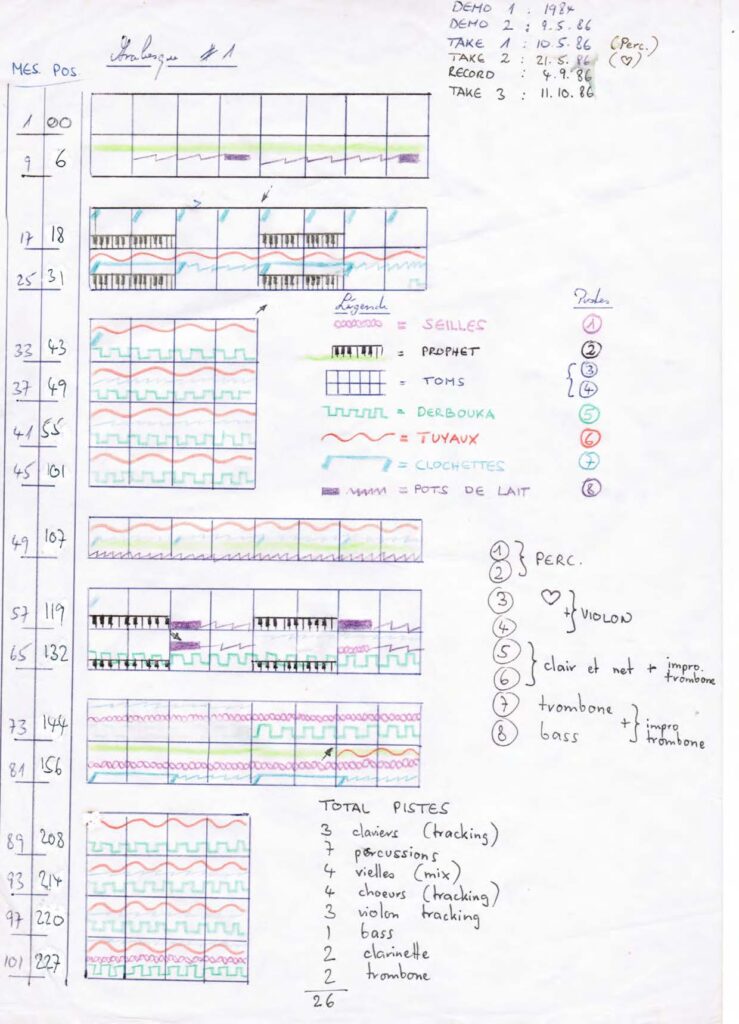
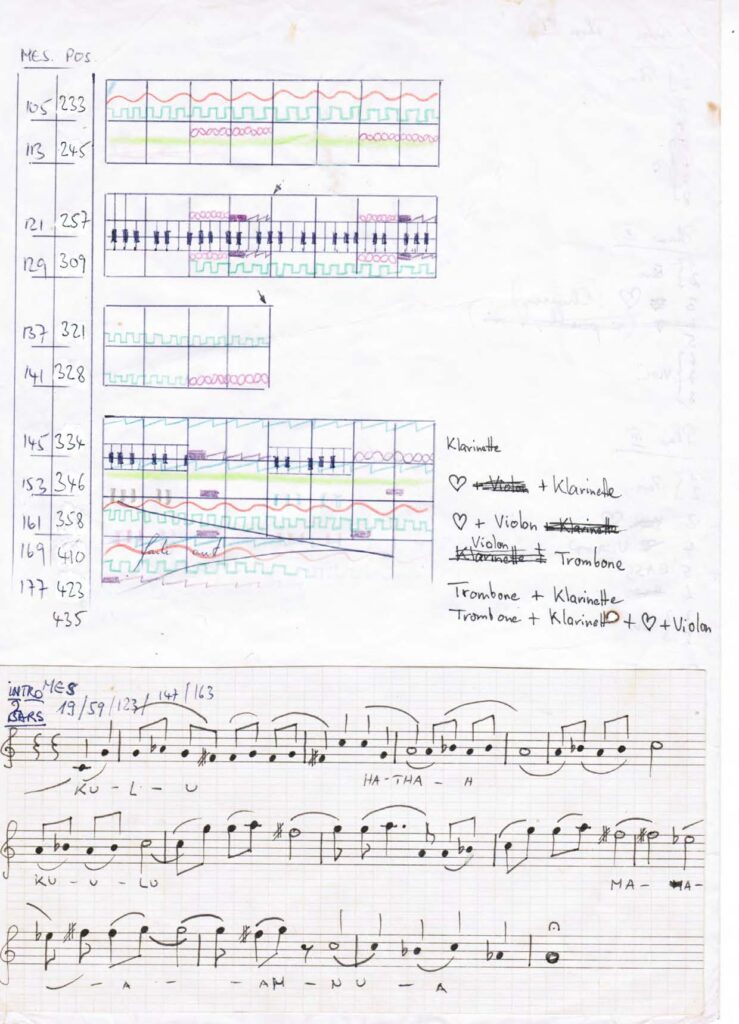
here you find various „partitions“ (sheet music), that show very logically and formally, how a lot of this „unformal music“ was created with friends and acquaintances that were often totally new to record ’something structured‘
Hereafter you find e.g. „Cuisine“, i.e. on the left you have the position of the taperecorder’s counter, so we could e.g. say: drop in the „tuyaux“ (plastic tubes) at „15“, meaning, the musician had to count 8 bars before he’s set in with the tubes. On other ‚partitions‘, I’d label the left column with the taperecorder’s counter AND the number of bars, such as in „Kulu“ (see below/after this „Cuisine“-score)… etc.
Visually/graphically any ‚instrument‘ or object can be followed so to prepare as to start a new section, making the „music“ appear structured, even if awesome in sound…
The reference is just TIMING, hence counting and FEELING (to make things groove / be on time)…
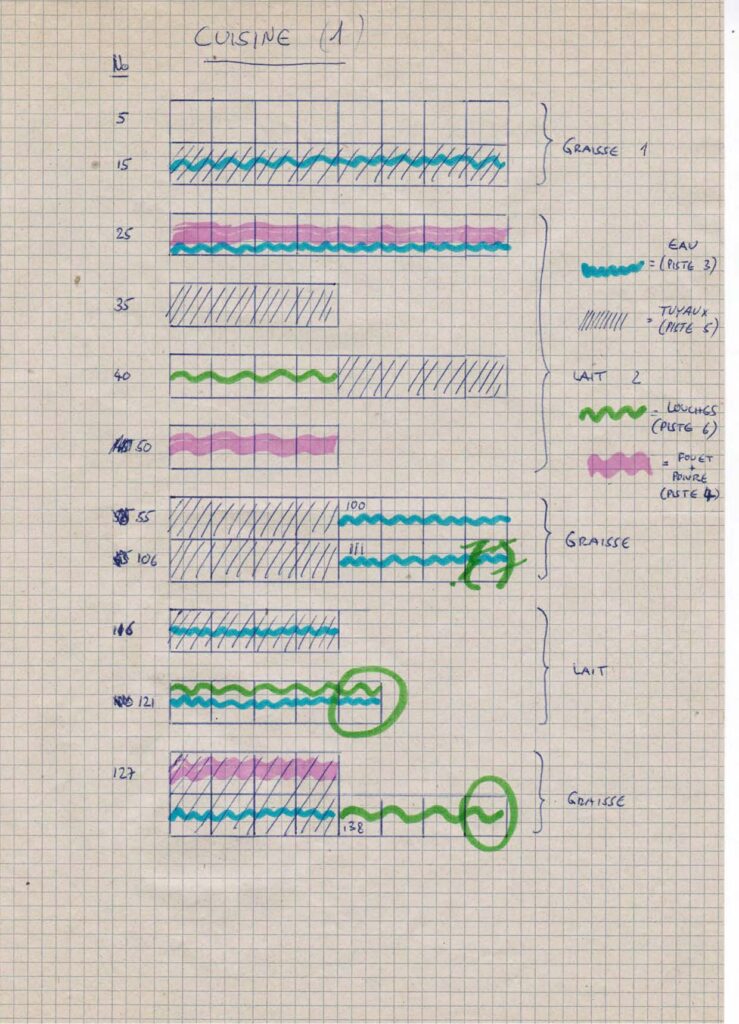
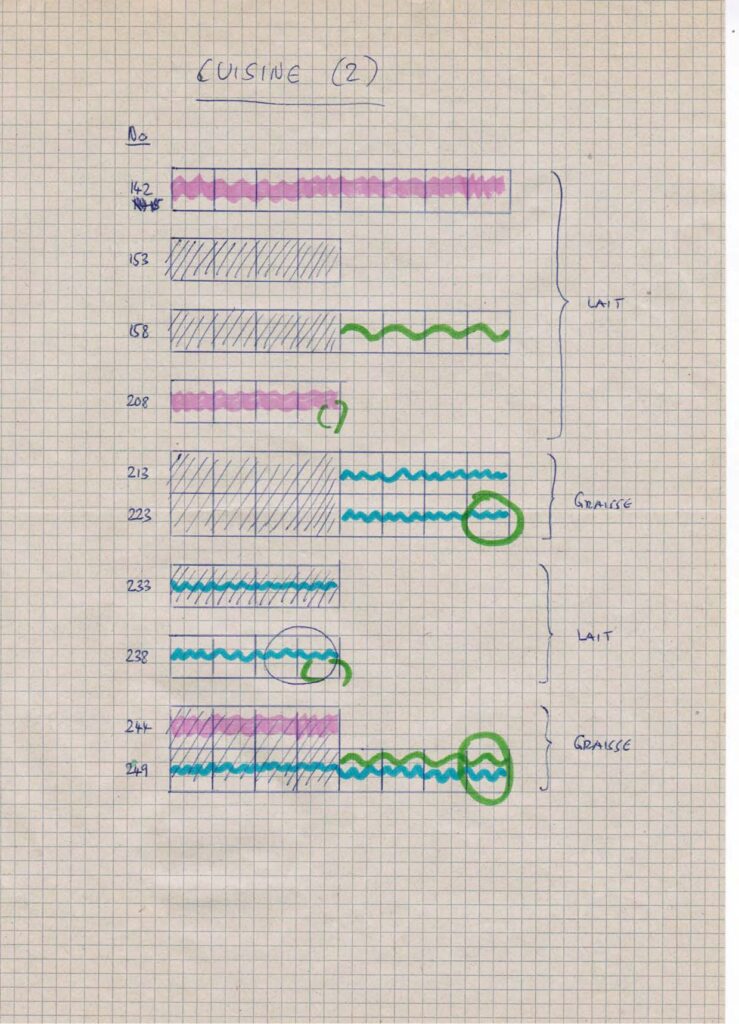
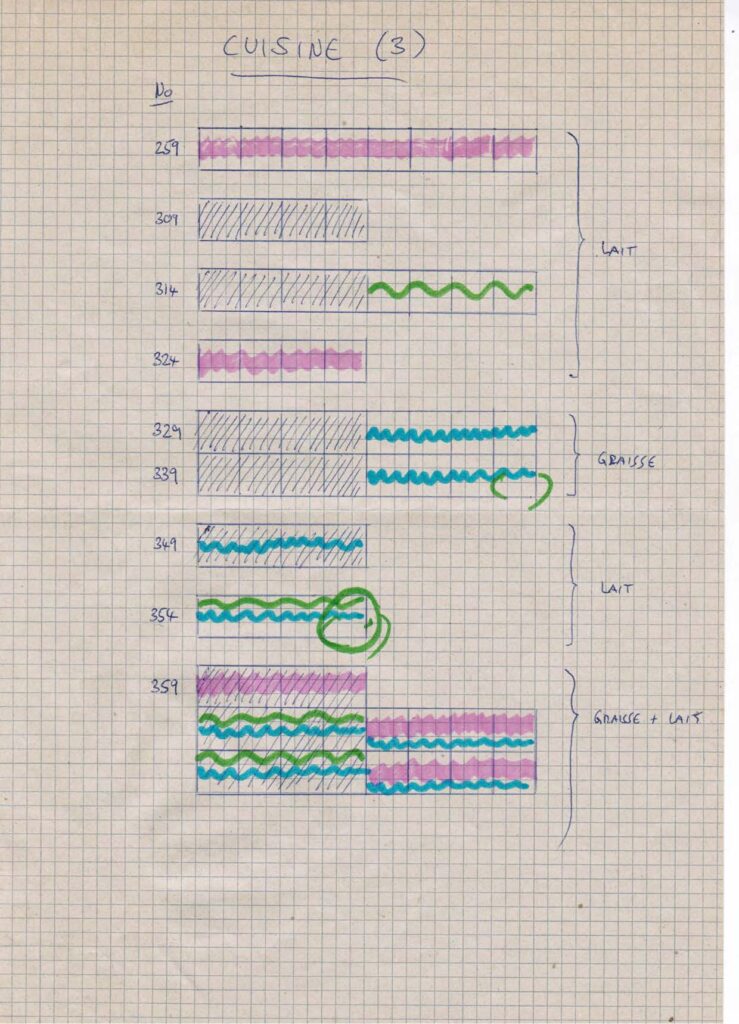
and/or
„Kulu Hatha Mamnua“
in two different versions. The first 2 pages were the basic rythm structure, and page 3 and 4 there is another set of „notations“ for further instrumental overdubs…
And the left side of the page you can see now the measure number and the (tape)position number (blanked out, though). Both of these positions are useful in a recording environment in order for me engineering/orienting a session technically and communicating musically with the musician at work… and all of it WITHOUT sheetmusic…
and „Adieu“